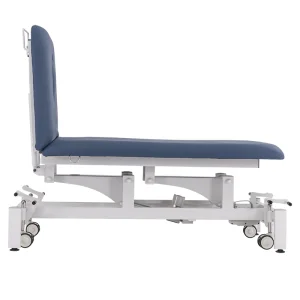
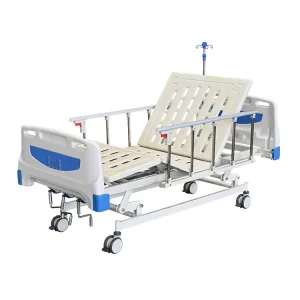
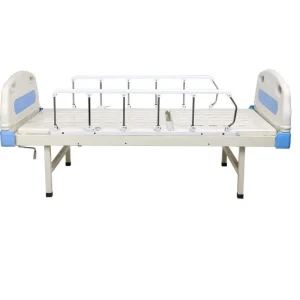
Explore our CE-compliant, high-durability electric and manual medical beds, designed to integrate seamlessly with smart clinical health management software platforms.
Modern healthcare ecosystems are undergoing a digital transformation. The separation between physical medical equipment and digital medical records has vanished. Today, leading health institutions demand CE Certified Health Management Software that interfaces directly with smart hardware, including telemetry-enabled hospital beds, non-invasive patient sensors, and critical care units.
At Hangzhou Dgem Medical Co., Ltd., we recognize that a hospital bed is no longer merely a mechanical support structure; it is the ultimate point-of-care patient node. By embedding smart sensor grids, weight tracking modules, and position indicators, our hardware outputs critical patient safety metrics directly to EHR (Electronic Health Record) platforms and clinical dashboards.
Our solutions target zero latency in communication protocols. Utilizing industry-standard HL7 and FHIR API systems, data generated from smart hospital beds—such as patient weight shift, egress warnings, and backrest angle—translates directly into actionable metrics within central health management portals.
Understanding the demands of ministries of health, group purchasing organizations (GPOs), and clinical system integrators.
For European and global procurement, hardware and accompanying software systems must satisfy Regulation (EU) 2017/745 (Medical Device Regulation - MDR). This ensures strict patient safety, biocompatibility, cybersecurity safeguards, and electromagnetic compatibility compliance.
Since connected health management systems stream sensitive personal health information (PHI), clinical databases demand compliance with GDPR in Europe and HIPAA in the United States. Encryption must be maintained during transit and at rest.
National healthcare schemes often require bespoke hardware styling or physical software interface localizations. Standardized control APIs must allow local developers to hook into the equipment seamlessly without breaking CE certifications.
Bridging IoT medical furniture with centralized hospital information systems (HIS).
Our smart hospital bed ecosystems capture telemetry through localized multi-sensor arrays. These metrics are processed instantly via a micro-controller unit embedded inside the bed frame, then pushed through a secure medical IoT gateway:
| System Layer | Primary Technology / Standard | Clinical Outcome |
|---|---|---|
| Interoperability APIs | HL7 / FHIR Version 4, MQTT, CoAP | Zero-silo compatibility with global HIS & EMR systems. |
| Sensory Framework | Multi-point strain gauge pressure sensor array | Early prediction & tracking of bedsore / decubitus developments. |
| Hardware Safety Standards | IEC 60601-2-52, EN 60601-1 | Prevent electrical shock, pinch risk, and electromagnetic cross-talk. |
| Data Encryption | AES-256 GCM, TLS 1.3 secured links | Strict prevention of patient health record breaches. |
Adapting smart health furniture structures to dedicated clinical spaces.
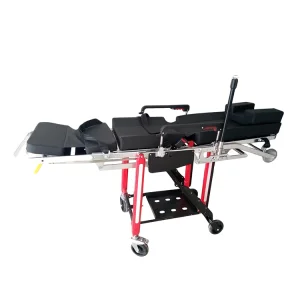
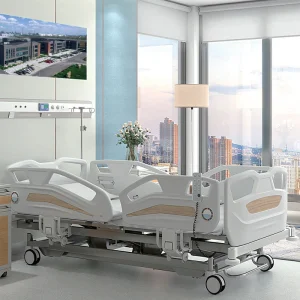
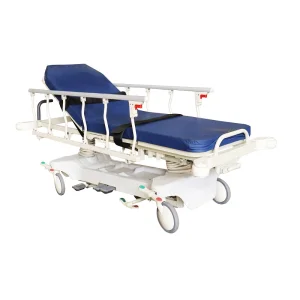
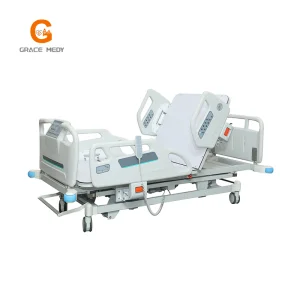
For critical care beds, continuous tracking is critical. Integrated load cells weigh patients automatically without needing manual transfers. Head-of-bed elevation status remains tracked via sensors, protecting mechanically ventilated patients from ventilator-associated pneumonia (VAP).
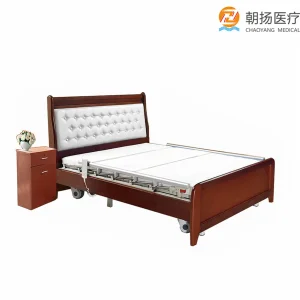
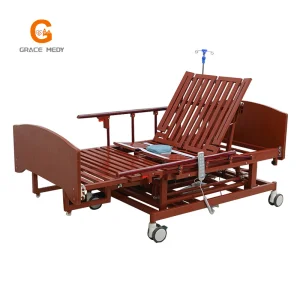
Our wooden electric home care beds align with residential aesthetics while providing high-quality profiling mechanics. Central management systems flag out-of-bed movements in real time for nursing home staff, reducing falls among elderly patients.
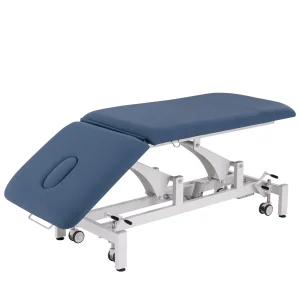
Rehabilitation environments require targeted ergonomic angles. Utilizing motorized therapy tables, physiotherapists program precise flex cycles. The system logs treatment duration, helping administrators calculate therapeutic throughput.
Hangzhou Dgem Medical Co., Ltd. is committed to the highest standards of safety, quality control, and clinical dependability.
Hangzhou Dgem Medical Co., Ltd. is a professional manufacturer specializing in advanced hospital bed solutions, delivering high-quality electric, manual, and smart patient care systems for global healthcare environments. With a strong focus on innovation, precision engineering, and patient-centered design, the company has established itself as a reliable partner for hospitals, nursing homes, rehabilitation centers, and home care providers.
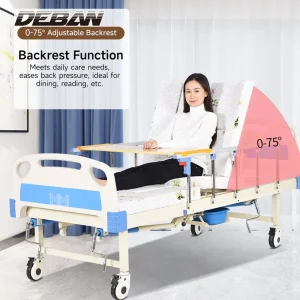
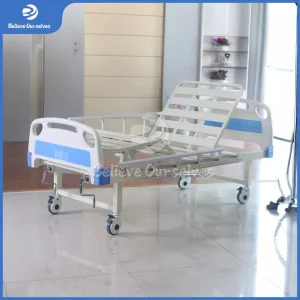
Dgem Medical offers a comprehensive product portfolio, including electric hospital beds, manual nursing beds, ICU critical care beds, and intelligent smart beds equipped with integrated monitoring and remote control functions. Each product is designed to enhance patient comfort, improve caregiver efficiency, and meet strict international healthcare standards.
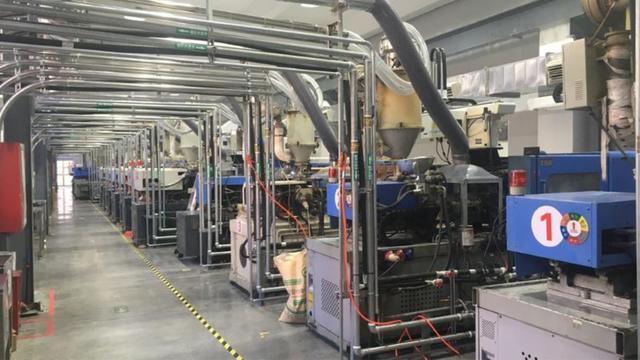
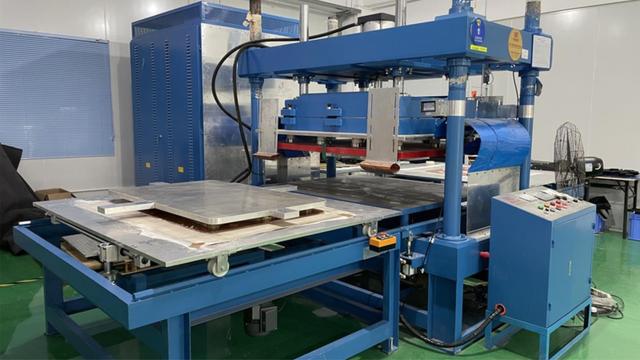
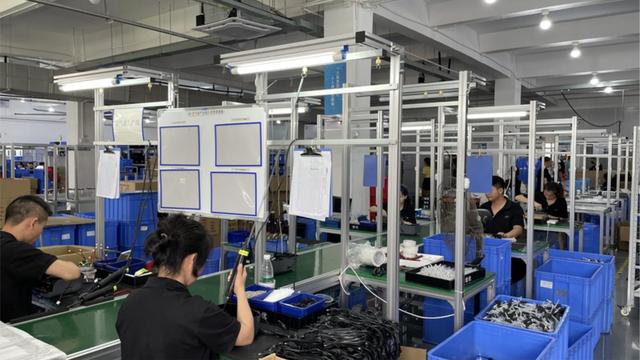
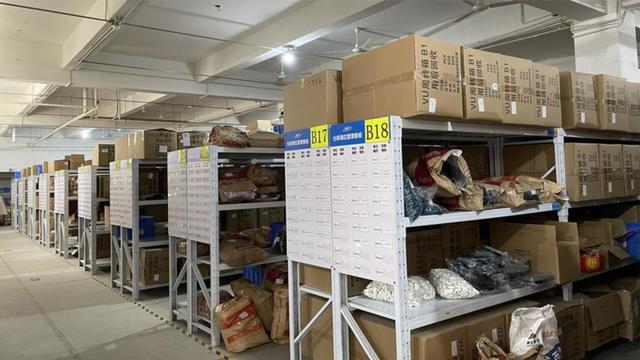
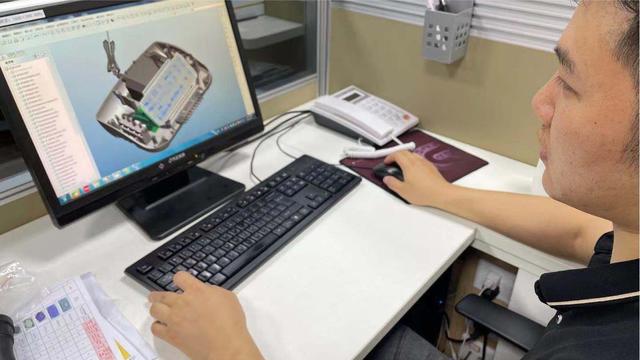
Backed by a skilled R&D team and modern manufacturing facilities, Hangzhou Dgem Medical integrates advanced technologies such as IoT connectivity and ergonomic design into its solutions. The company emphasizes durability, safety, and ease of operation, ensuring long-term value for medical institutions.
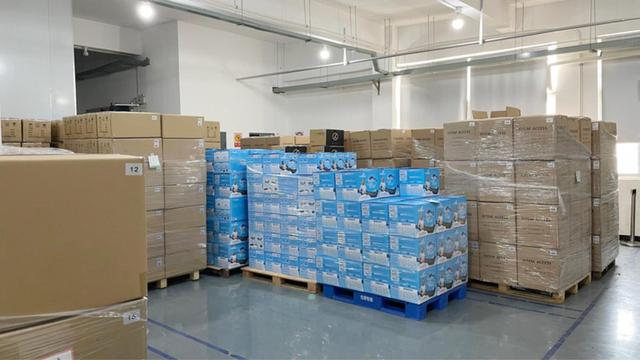
Committed to quality and global service, Dgem Medical adheres to rigorous quality control systems and provides flexible OEM/ODM services to meet diverse market demands. With a growing international presence, the company continues to support healthcare providers worldwide by delivering reliable, efficient, and innovative patient care equipment.
Addressing key validation questions from biomedical engineers, procurement directors, and software developers.
Our smart beds utilize embedded multi-sensor arrays connected to a local micro-processing unit. This unit processes physical events (such as patient weight shifting, backrest movement, and exit warnings) and encapsulates them into HL7-compliant JSON packets. These packets are transmitted via secure medical MQTT or HTTPS connections directly to local health management servers, ensuring instant synchronization with EHR files.
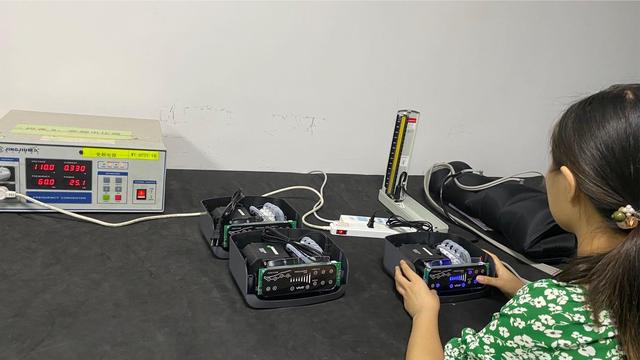
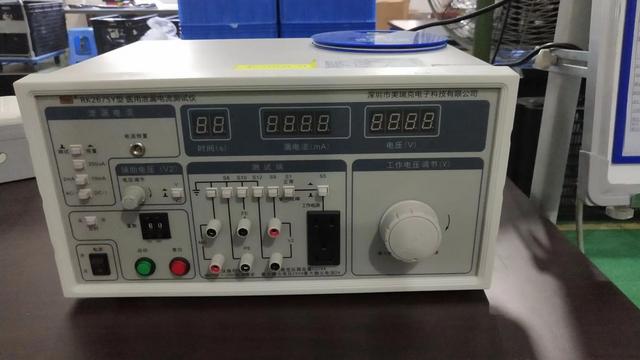
All electric hospital beds manufactured by Hangzhou Dgem Medical are designed, produced, and inspected in accordance with IEC/EN 60601-2-52 standards. This governs patient positioning systems, preventing mechanical entrapment, ensuring sufficient clearance under critical components, and verifying structural stability under dynamic working loads up to 250kg.
Yes, our systems integrate with specialized medical air mattresses that utilize anti-bedsore algorithms. The software detects static pressure distributions and communicates with the alternating pump systems of the mattress to adjust air chamber inflation cycles, ensuring no point on the patient's skin remains under excessive load for long periods.
Data transmission uses TLS 1.3 encryption protocols, while API requests require unique client tokens (OAuth 2.0). If local regulatory standards dictate that all data must stay within physical hospital boundaries, we offer local server installations that bypass cloud routing entirely, keeping PHI compliant with GDPR and regional data hosting laws.
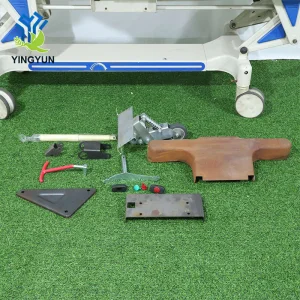
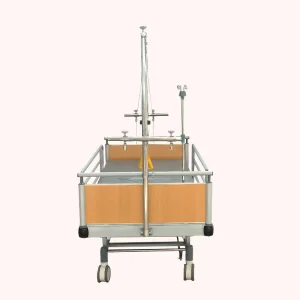
Yes. Our customized models are engineered with standardized fitting matrices. This allows for simple retrofitting of IV poles, emergency traction kits, safety side-rails, oxygen cylinder holders, and nurse call buttons, ensuring compatibility across your current ward inventory.
Select hospital beds, orthopedic suspension platforms, and electrical massage rehabilitation configurations.
 Dgem Medical