Top 10 Factors That Affect Hospital Bed Pricing

Time:2026-11-08 Author:Mason
0%

Hospital bed prices can range from a basic manual frame to a fully powered critical-care system. The gap is not just about brand. It reflects materials, motor configuration, safe working load, mattress type, side rails, controls, and monitoring features. Delivery, installation, staff training, warranty coverage, and service access also change the final cost. Small details matter. A control panel placed within easy reach can affect usability, while a specialist mattress may add substantially to the purchase price.

So, what factors affect hospital bed pricing? A useful starting point is to compare the full specification and lifecycle cost, not just the quoted unit price. The American Hospital Association’s 2024 report on hospital costs found that expenses rose 17.5% from 2019 to 2022, underscoring the budget pressure behind equipment decisions. AHA President and CEO Rick Pollack has described hospitals as facing “unprecedented financial challenges.” That pressure makes transparent quotes and clear service terms important. Still, a low purchase price does not always mean better value; maintenance needs and replacement parts can change the calculation. This article examines ten factors, from bed type and materials to purchasing volume and after-sales support. Prices also vary by supplier and market, so readers should verify current quotes against their own clinical and operational needs. We will keep one limitation in view: public price data is uneven, and headline prices may omit delivery or service costs.
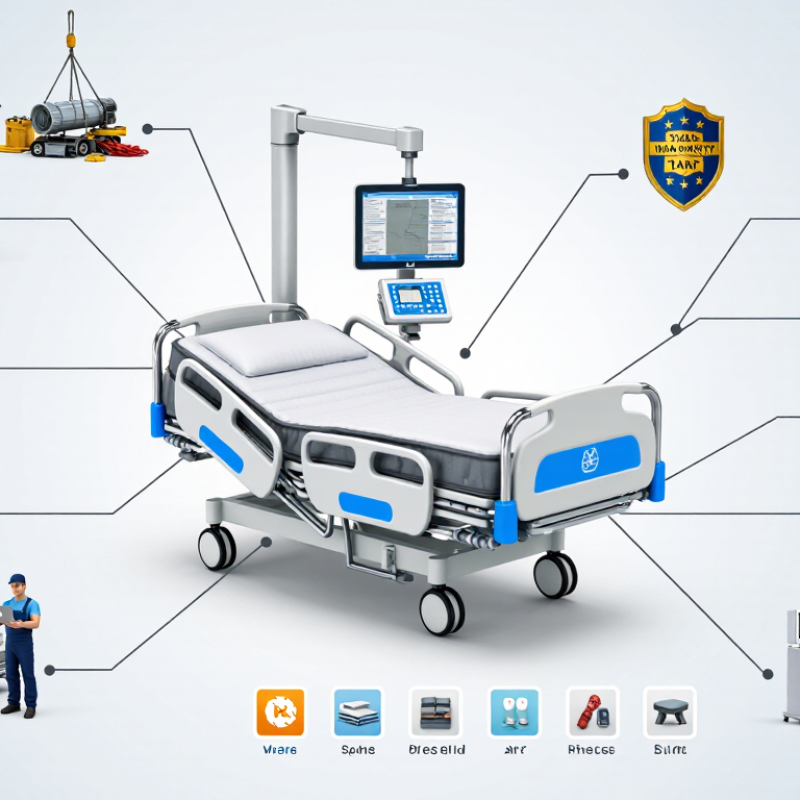
Top 10 Factors That Affect Hospital Bed Pricing

What Hospital Bed Pricing Includes

A hospital bed quote should cover more than the frame. Not just steel. The base price may include an adjustable frame, side rails, a hand control, and a compatible mattress. Check whether the mattress is pressure-redistributing or a standard foam model; the difference affects both cost and clinical suitability. Options such as a scale, battery backup, nurse-call connection, and extra rails may be priced separately. Ask for each item to be listed, not bundled under “standard configuration.”

Delivery and setup can also change the final price. Confirm whether freight, room-of-use installation, staff training, and removal of old equipment are included. Then check warranty length, service response times, replacement-part coverage, and any recurring maintenance fees. These details are easy to overlook.

The American Hospital Association’s 2024 Costs of Caring report found that hospital expenses rose 17.5% between 2019 and 2023. That figure is not a bed-price benchmark, but it shows why buyers should assess the full ownership cost, not just the purchase price.

A low quote may exclude useful support. That can be a costly surprise. Compare quotes using the same mattress type, accessories, delivery terms, and service period, and ask vendors to identify exclusions in writing.

How Bed Type and Intended Use Affect Cost

A hospital bed’s price often starts with its basic design. A manual bed uses hand cranks and may suit short-term care where frequent adjustments are unnecessary. Electric models add motorized height and position controls, which can reduce staff effort during repeated repositioning. The difference is practical: picture a nurse raising a bed several times during one shift. Convenience matters, but so do purchase cost, maintenance, and access to replacement parts.

Intended use changes the specification—and the price. An intensive-care bed may need precise positioning, integrated alarms, and compatibility with monitoring equipment. A bariatric model requires a wider frame and higher weight capacity, while a pediatric bed needs suitable rails and dimensions. These features are not interchangeable extras. A facility should match them to patient needs, care routines, and room size. More features can help, yet unused functions still add cost.

Look beyond the initial quote. Check the mattress requirements, cleaning routine, service schedule, and expected frequency of use. A bed used daily may justify stronger components and easier maintenance; one used occasionally may not. Ask clinical and facilities staff to review the specifications together. It is easy to overbuy. It is also easy to miss a small detail, such as whether the bed fits through a narrow doorway. I would not treat the cheapest option as the best value without checking those details.

How Materials, Design, and Safety Features Shape Price

Hospital bed prices reflect more than the frame. Steel frames are often sturdy, while lighter materials can make beds easier to move. Surface finishes also matter: coatings that resist scratches and frequent cleaning may add cost. Mattress platforms with adjustable sections need more moving parts than fixed platforms. Small differences add up.

Design affects both price and daily use. A bed with smooth height adjustment, clear controls, and easy-to-reach hand cranks may save staff effort. Wider adjustment ranges or powered positioning can increase the purchase price. Still, the most expensive design is not automatically the best fit. A compact ward bed and a bed intended for extended care may need very different features.

Safety features can also shape the quote. Look for stable caster brakes, secure side rails, rounded edges, and clearly stated weight limits. Integrated alarms or extra positioning controls may raise costs, so consider whether they suit the patient and care setting. Details matter. Not always obvious.

Tips: Compare the same specifications across quotes, including materials, adjustment range, rail configuration, and warranty coverage. Ask how components are maintained and replaced. A low upfront price may not tell the whole story; repair access and staff training deserve a closer look.

How Technology, Accessories, and Customization Change Cost

Technology can raise a hospital bed’s purchase price, but the features matter more than the label “advanced.” Electric height and backrest controls reduce manual effort, while battery backup helps during power interruptions. Extra sensors or integrated weighing systems add cost and may require staff training, calibration, and service support. Convenience has a price. Buyers should ask what maintenance is included and how replacement parts are sourced.

Accessories can change the total quickly. A pressure-redistributing mattress, adjustable side rails, an IV pole, and a removable headboard each serve a practical purpose, but not every ward needs every option. Check that mattresses fit the platform and that rails work with the intended patient group. Small compatibility details are easy to miss. They can lead to extra purchases later.

Customization affects both upfront cost and daily usability. Bariatric capacity, unusual bed dimensions, specialized controls, or extra transport features may require a different frame or stronger components. These changes can be worthwhile, yet they may narrow future replacement choices. A useful comparison includes delivery, setup, training, warranty coverage, and expected servicing—not just the quoted bed price. It is tempting to choose the most feature-rich model. That is not always the most practical choice. A clear list of clinical needs helps separate essential options from costly extras.

How Suppliers, Purchase Volume, and Lifecycle Costs Influence Price

Hospital bed quotes depend on more than frame and mattress. Supplier pricing often bundles delivery, installation, staff training, warranty coverage, and service response times differently. Compare those line items, including spare-part availability and repair turnaround. A low quote can become costly when a failed actuator leaves a bed unusable. Ask suppliers to price equivalent configurations and disclose exclusions. Small details matter.

Purchase volume can improve unit pricing, but only when specifications, delivery schedules, and service terms are comparable. The American Hospital Association’s 2024 Fast Facts reported 919,649 staffed beds across 6,120 U.S. hospitals, illustrating the scale of bed infrastructure. A single facility rarely buys at that scale, though coordinated purchasing may strengthen negotiating power. It can also create storage and deployment problems if deliveries arrive before rooms are ready. I would question any discount that depends on accepting unnecessary features.

Lifecycle cost includes maintenance, replacement parts, cleaning-related wear, batteries, and downtime—not just the purchase order. WHO’s 2011 Medical Equipment Maintenance Programme Overview emphasizes planned maintenance and equipment inventories, useful practices for budgeting beyond acquisition. Ask for expected service intervals, parts pricing, warranty limits, and estimated useful life in writing. Those estimates are not guarantees. Compare them against your own repair history; generic assumptions can miss local wear, staffing, and usage patterns.

Top 10 Factors That Affect Hospital Bed Pricing - How Suppliers, Purchase Volume, and Lifecycle Costs Influence Price

Factor What Influences the Price Typical Price Effect What Buyers Should Evaluate
1. Bed Type and Care Setting Manual, semi-electric, fully electric, bariatric, and specialty beds have different mechanisms, load capacities, and clinical functions. High Match the bed type to the care environment and patient needs. A basic manual bed generally costs less than a powered acute-care or specialty bed.
2. Supplier and Distribution Channel Pricing can reflect product configuration, distribution and delivery arrangements, technical support, service coverage, and the terms of the quotation. Moderate to high Compare equivalent specifications and clarify what is included, such as delivery, installation, training, warranty, and after-sales service.
3. Purchase Volume Larger orders may qualify for tiered pricing or more efficient freight and purchasing arrangements. Savings depend on order size and contract terms. Moderate Request itemized quotes at different quantities and account for storage, phased delivery, and the cost of holding spare units.
4. Electrical and Positioning Features Powered height adjustment, backrest and leg positioning, integrated controls, and additional positioning options add components and complexity. Moderate to high Specify which adjustments are clinically necessary and check control accessibility, emergency functions, and compatibility with existing equipment.
5. Safe Working Load and Bed Size Higher load ratings and wider frames may require stronger structures, reinforced components, and compatible accessories. Moderate to high Confirm the required safe working load and mattress-platform dimensions; do not assume that a higher rating is needed for every unit.
6. Construction and Durability Frame materials, component quality, finish, moving-part design, and expected duty cycle can affect purchase price and service life. Moderate Review cleaning requirements, corrosion resistance, repairability, parts availability, and expected use intensity.
7. Safety and Regulatory Requirements Applicable safety standards, testing, documentation, and market-specific regulatory requirements can influence design and compliance costs. Low to high Verify that the product documentation and certifications meet the requirements for the destination market and intended care setting.
8. Accessories and Configuration Side rails, headboards, footboards, mattresses, scales, patient controls, and other options may be priced separately or bundled. Low to high Compare complete, like-for-like configurations and identify which accessories are included, optional, or incompatible with other equipment.
9. Warranty, Service, and Spare Parts Warranty duration and coverage, preventive maintenance, response times, labor charges, and access to replacement parts affect ownership costs. Moderate over the lifecycle Check exclusions, service availability, expected maintenance intervals, parts lead times, and whether service costs are included in the quotation.
10. Lifecycle Costs and Useful Life Total cost of ownership includes the initial purchase, maintenance, repairs, energy use for powered beds, replacement parts, and eventual disposal. High over time Compare expected costs over the planned service period rather than selecting solely on the lowest upfront price. Use facility-specific maintenance and utilization assumptions.

Note: Price effects are relative and indicative, not fixed percentages. Actual quotations vary by bed specification, market, order terms, delivery requirements, and included services.

FAQS

What affects the starting price of a hospital bed?

Manual beds use hand cranks and may suit care with few position changes. Electric beds add motorized controls, which can reduce repeated staff effort. Convenience has a cost.

How does the patient’s care needs affect bed cost?

Intensive-care beds may need precise positioning and alarm compatibility. Bariatric beds need wider frames and higher weight limits. Pediatric beds require suitable dimensions and rails. These features are not interchangeable.

Is the cheapest bed always the best value?

Not necessarily. Check mattress needs, cleaning routines, maintenance, and expected use. A low purchase price may be offset by repairs or downtime. I might be overvaluing the quote alone.

Which materials and design details influence price?

Strong frames, durable finishes, and adjustable mattress platforms can raise costs. Lighter materials may make a bed easier to move. Small differences add up.

What safety features should buyers compare?

Review caster brakes, side rails, rounded edges, and stated weight limits. Alarms and extra controls may be useful in some settings, but not all. Details matter.

What should suppliers include in their quotes?

Compare delivery, installation, training, warranty coverage, and service response times. Ask about spare parts and repair turnaround. A failed actuator can leave a bed unusable.

Can buying more beds reduce the unit price?

It may, when specifications, delivery dates, and service terms match. Large orders can also create storage problems if rooms are not ready. Discounts tied to unwanted features deserve scrutiny.

What costs should buyers consider over a bed’s lifetime?

Include maintenance, parts, batteries, cleaning wear, and downtime. Request service intervals, warranty limits, and estimated useful life in writing. Those estimates are not guarantees. Compare them with local repair records.

Conclusion

Hospital bed pricing includes more than the bed itself. The total cost may cover essential components, delivery, setup, and support, depending on what is included in the purchase. To understand what factors affect hospital bed pricing, start with the bed’s type and intended use: basic models for general care may cost less than beds designed for specialized settings or more frequent adjustments.

Materials, construction, and safety features also shape the price, as do powered functions, monitoring options, accessories, and custom configurations. The supplier and order size can influence the quoted price, while the long-term cost depends on maintenance, replacement parts, expected lifespan, and energy use. Comparing these elements together gives buyers a clearer picture of value and helps them choose a bed that meets care needs without focusing only on the initial purchase price.

Mason

Mason

Mason is a seasoned marketing professional with a deep expertise in the company's offerings and a passion for driving brand awareness. With a strong background in digital marketing strategies, he has an innate ability to connect with diverse audiences and effectively communicate product benefits.......