Patient mobility during recovery is crucial for optimal healing. Understanding how to improve patient mobility during recovery can significantly impact outcomes. Studies show that early mobilization reduces the length of hospital stays by 20% (Journal of Rehabilitation Medicine, 2020). Enhanced mobility decreases the risk of complications like pneumonia, which affects nearly 5% of post-operative patients (Health Affairs, 2021).
Effective strategies include tailored exercise programs and the use of mobility aids. Simple techniques, such as encouraging daily walks, can yield substantial benefits. Yet, it's essential to recognize that not every patient responds the same way. Individual factors like age and comorbidities can influence recovery trajectories.
Healthcare providers must focus on personalized approaches. Continuous assessment of patient progress is vital. Moreover, fostering an environment that promotes activity can be challenging in traditional hospital settings. Balancing safety with mobility efforts often requires innovative solutions and teamwork. Finding the right methods may take time and reflection, but the rewards can transform recovery experiences.
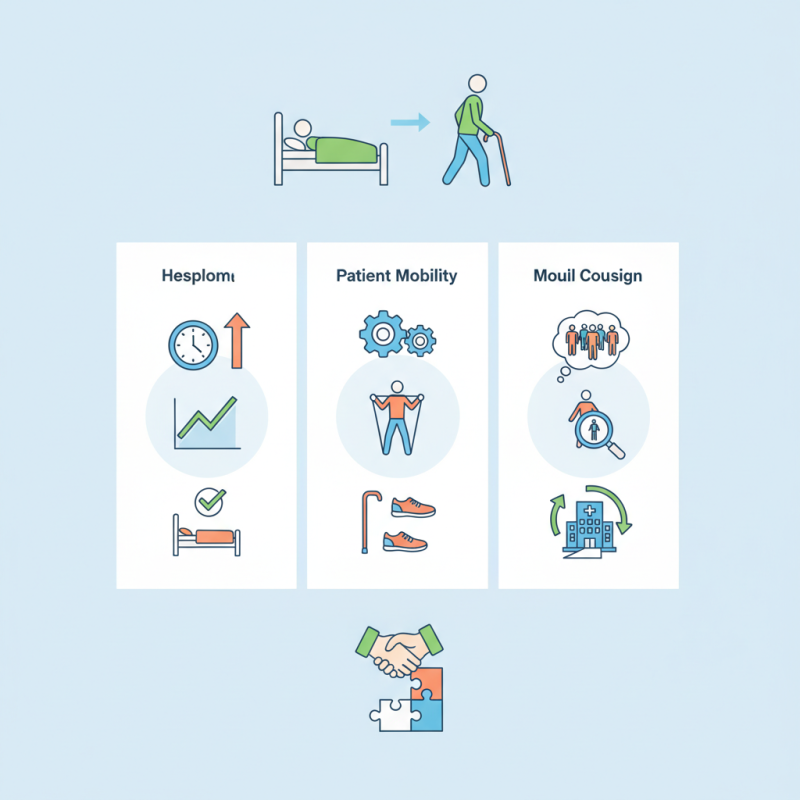
Patient mobility plays a crucial role in recovery. Research indicates that maintaining mobility during the healing process can significantly improve patient outcomes. A report from the American Physical Therapy Association shows that patients who engage in regular physical activity have a 20% higher chance of a successful recovery compared to their sedentary counterparts. This highlights the importance of encouraging patient movement, even in small increments.
One effective tip is to set achievable daily goals. Start with short, frequent walks. This can enhance circulation and speed up healing. Another important factor is the involvement of healthcare professionals. They can offer guidance tailored to individual needs. Their expertise ensures that mobility exercises are safe and effective. It is essential to prioritize patient comfort while promoting these activities.
In some cases, challenges arise. Patients may feel pain or lack motivation. Addressing these obstacles is vital for progress. Healthcare providers should be equipped to support patients emotionally and physically. Open communication can help identify and overcome barriers to mobility. Each patient's journey is unique, making it important to adapt strategies accordingly for optimal recovery.
: Patient mobility significantly improves outcomes during recovery. Engaging in regular physical activity boosts the chances of success.
Patients should start with short, frequent walks. Setting achievable daily goals can enhance circulation and promote healing.
Healthcare professionals provide guidance personalized to individual needs. Their expertise ensures mobility exercises are safe and effective.
Patients may experience pain or lack motivation. Addressing these issues is essential for progress and encouraging movement.
Remove obstacles and use assistive devices if needed. A safe setting helps prevent injuries during mobility exercises.
Monitoring progress can reveal patient response to treatments. It leads to adjustments that make a difference in recovery.
Regular evaluations help identify when to alter exercise intensity. Patients showing fatigue may need a revised regimen.
Individual recovery rates vary, leading to frustration. Emotional well-being is linked to physical progress, so support is crucial.
Encourage short walks and celebrate small successes. Use visual aids to remind patients to move regularly.
Open discussions about challenges promote tailored interventions. Collaboration strengthens the support system for each patient's journey.
Improving patient mobility during recovery is essential for enhancing overall outcomes and facilitating a faster return to daily activities. Understanding the importance of patient mobility involves recognizing how it affects healing and independence. To effectively address mobility, healthcare providers must assess individual patient needs and identify any barriers that may hinder movement.
Implementing targeted strategies and techniques, such as tailored exercise plans and assistive devices, can significantly aid in enhancing mobility. It is also crucial to monitor progress and adjust care plans as needed to ensure optimal recovery. Additionally, encouraging patient engagement and providing support throughout the recovery journey fosters motivation and confidence, ultimately leading to improved mobility. Emphasizing these key areas can provide valuable insights on how to improve patient mobility during recovery and contribute to successful rehabilitation outcomes.

 Dgem Medical