Hospital beds are changing from basic platforms into active parts of care. For 2026, designers are paying closer attention to safety, comfort, and the daily work of clinical teams. Adjustable positions can support easier transfers and help staff reach patients without awkward lifting. Softer edges, clear controls, and quieter motors may also make a room feel less clinical. Small details matter.
So, what are the latest trends in hospital bed design? Key developments include pressure-redistributing surfaces, built-in exit alerts, and connected systems that share bed-status information with care teams. Some models add scale functions, under-bed lighting, or controls that patients can use without calling for help. These features can be useful, but their value depends on staff training, reliable maintenance, and a clear fit with care routines. Not every feature helps.
Materials and maintenance are also shaping decisions. Smooth, durable surfaces can make cleaning easier, while modular parts may simplify repairs and upgrades. More facilities are weighing energy use and product lifespan alongside purchase price. Still, “smart” does not always mean better. A sensor that creates frequent false alerts may add work rather than reduce it. The best choice depends on patient needs, room layout, infection-control procedures, and feedback from bedside staff. Bed design should be assessed with clinical and facilities teams, not chosen from a feature list alone. As hospitals compare options for 2026, the central question is practical: does the bed make care safer, more comfortable, and more manageable in real conditions?
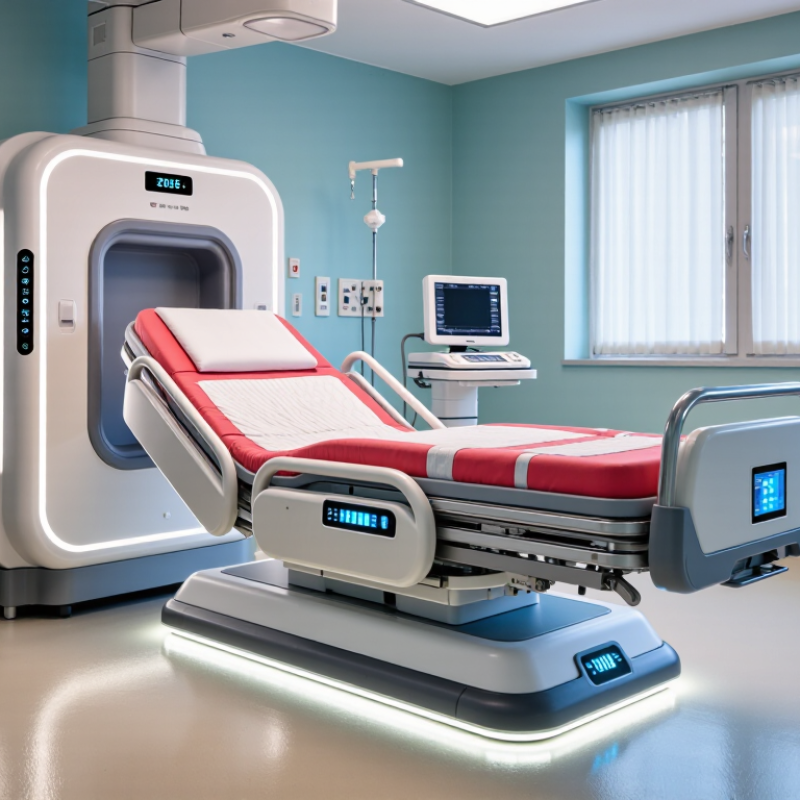
A hospital bed must support safe care, patient comfort, and everyday clinical work. Its core functions include adjustable height, a backrest, and leg positioning. These features help staff transfer patients and support different care needs. Clear, reachable controls matter. Confusing buttons can slow routine adjustments, especially when staff are wearing gloves or working in dim light.
A low bed position can reduce the distance to the floor, while secure brakes help prevent unwanted movement during transfers. Side rails need careful selection: they may assist with repositioning, but they are not a substitute for individualized assessment. The frame and mattress should match the patient’s weight and care requirements. Surfaces also need to tolerate frequent cleaning without leaving hard-to-reach seams. Small details matter.
Clinical teams should check how easily the bed supports CPR positioning, patient access, and equipment placement. Cable routing and visible control labels can prevent avoidable snags or delays. Bed-exit alerts may support observation, but they cannot replace regular assessment. Needs vary, and no single configuration suits every patient. In practice, even a well-designed bed can frustrate staff if its controls or accessories are poorly placed. That deserves a closer look during selection.
A modern hospital bed is a coordinated system, not just a mattress on a frame. Adjustable height helps staff position patients for transfers and care, while a low-bed setting can reduce the distance to the floor. Locking casters matter too: a bed that shifts during a transfer creates an avoidable hazard. In a six-hospital study, Bouldin and colleagues recorded 3.56 patient falls per 1,000 patient-days (Journal of Nursing Care Quality, 2013). That figure supports careful attention to bed positioning, brakes, and accessible controls, though bed design alone cannot prevent falls.
The mattress and support surface are equally important. AHRQ’s pressure-ulcer guidance reports that about 2.5 million people in the United States develop pressure ulcers each year. Pressure-redistributing surfaces, moisture-resistant covers, and clear repositioning controls can support prevention efforts. They do not replace regular skin checks or clinical judgment. Small details matter.
Side rails, hand controls, and sensors should suit the patient and care setting. Rails can help with repositioning, but they may also restrict movement or create entrapment concerns if poorly matched to a patient. Controls should be easy to see and reach, even with limited hand strength. Smooth surfaces and fewer seams can simplify cleaning. There is no perfect configuration: a feature that helps one patient may complicate care for another.
Hospital bed design in 2026 is increasingly shaped by practical needs at the bedside. Height adjustment, repositioning, and clear controls can help staff work more comfortably while supporting patient movement. Bedside controls should be easy to locate, even in a dim room, and simple enough to use without repeated explanation. Details matter.
Pressure-redistributing surfaces and built-in mobility features are also receiving attention. These features can support care plans, but they do not replace regular assessment or repositioning. Some beds include sensors that alert staff to movement or changes in position. Their value depends on thoughtful setup: too many alerts may distract rather than help. Not every feature earns its place.
Cleanability and repair are shaping frame and accessory choices. Smooth surfaces, fewer hard-to-reach gaps, and removable components can make routine cleaning more straightforward. Modular rails and accessories may also let facilities adapt beds to different care settings. Yet added parts can complicate maintenance, and a more advanced bed is not automatically a better fit. Teams should compare controls, cleaning steps, service needs, and room layouts before selecting equipment. A small usability test with staff can reveal awkward handles or controls that look clear on paper but are confusing during a busy shift.
Hospital beds in 2026 are moving beyond basic adjustability. Smart sensors can track bed position, movement, and exit attempts, then route alerts to staff. These features may support faster responses, but they do not replace observation or sound clinical judgment. The Agency for Healthcare Research and Quality’s Preventing Falls in Hospitals toolkit reports that an estimated 700,000 to 1 million hospitalized patients fall each year in the United States. That figure makes low-height settings, stable brakes, clear controls, and well-designed exit alerts practical safety priorities. WHO’s Patient Safety fact sheet estimates that about 1 in 10 patients experiences harm in health care. Bed design is only one part of reducing that risk.
Tips: Test alerts during real shift workflows. Set thresholds to limit unnecessary alarms, and check that staff can see brake status at a glance. Keep controls reachable from both sides when care routines require it.
A useful bed should communicate clearly: a visible light for an unlocked brake, a quiet movement sensor, and a simple hand control can matter more than a crowded screen. Yet sensor data can be incomplete, and alerts may be missed in busy rooms. That deserves honest evaluation. Hospitals should test new features with patients and care teams, review false alarms, and confirm that manual functions remain usable during network or power interruptions.
Evidence-based patient safety context for bed design
AHRQ reports that 30–50% of hospital falls result in injury, while about 10% result in serious injury. The 40% bar is the midpoint of the reported injury range; it is not a separate measured rate. These figures provide safety context for design considerations such as low-height positioning and bed-exit alerts, not a measure of any specific bed technology’s effectiveness.
Source: Agency for Healthcare Research and Quality (AHRQ), Preventing Falls in Hospitals: A Toolkit for Improving Quality of Care.
A hospital bed should fit the care setting, not just the room. In intensive care, low-height positioning, secure side rails, and clear access around the bed support frequent clinical work. On medical-surgical wards, easy-to-clean surfaces and simple controls matter during quick room turnover. The World Health Organization’s 2022 global infection prevention report estimates that 7 in 100 patients in high-income acute-care hospitals acquire at least one healthcare-associated infection. Bed frames, mattress seams, and control panels deserve practical attention.
Rehabilitation units need beds that support safe transfers and gradual mobility, with adjustable heights and reachable hand controls. In long-term care, comfort, pressure redistribution, and ease of caregiver access may matter more than advanced monitoring features. These needs can conflict. A highly adjustable bed may also add controls that confuse users; designers should test them with patients and staff, not assume more functions mean better care. Small details count. A cable crossing a transfer path can become a real obstacle.
Tips: Match bed height and controls to the daily tasks in each unit. Check cleaning access around joints and casters. Ask frontline staff to test prototypes during actual workflows. Their feedback may be inconvenient, but that is useful.
Adjustable height, a backrest, and leg positioning support transfers and different care needs. Clear controls matter.
It reduces the distance to the floor if a patient falls. Secure brakes also help prevent unwanted movement during transfers.
No. Rails may assist with repositioning, but staff should assess each patient’s needs. They are not a substitute for individual care.
Both should suit the patient’s weight and care requirements. Check seams and surfaces for easy cleaning. Small gaps can be troublesome.
No. Alerts may support monitoring, but regular assessment remains necessary. Too many alerts can distract staff.
Low positioning, secure rails, and clear access around the bed help with frequent clinical tasks. Check where equipment and cables sit.
Rehabilitation beds should support transfers and gradual mobility, with reachable controls. Long-term care may prioritize comfort, pressure redistribution, and caregiver access.
Ask staff to try them during real tasks, including in dim rooms and while wearing gloves. Paper plans can miss awkward handles.
No. Extra controls and accessories can complicate use and maintenance. A brief usability test may reveal what does not work.
Hospital bed design in 2026 is increasingly focused on combining clinical functionality, patient comfort, and caregiver efficiency. Essential features include adjustable positioning, stable support, easy-to-clean surfaces, and controls that help staff carry out everyday care safely. Key components—from the frame and mattress platform to side rails and mobility features—are being designed as an integrated system that can adapt to changing patient needs.
When considering what are the latest trends in hospital bed design, priorities include smarter monitoring, clearer controls, improved fall-prevention features, and designs that support safer transfers and easier access for caregivers. Beds are also being tailored to different care settings, such as intensive care, general wards, and long-term care, where requirements vary. Overall, the direction is toward adaptable, safety-focused beds that support clinical workflows while promoting patient dignity, comfort, and independence.

Dgem Medical